For nearly three decades, the Java Community Process (JCP) has provided an open, collaborative framework through which Java specifications are developed and maintained. As Java has evolved, so too has the platform that supports the global community behind those standards.
In June 2026, the JCP launched the first phase of a major redesign of jcp.org, the site's first significant visual refresh since 2009 and only the third major revision of jcp.org since its creation.
Evolution of jcp.org
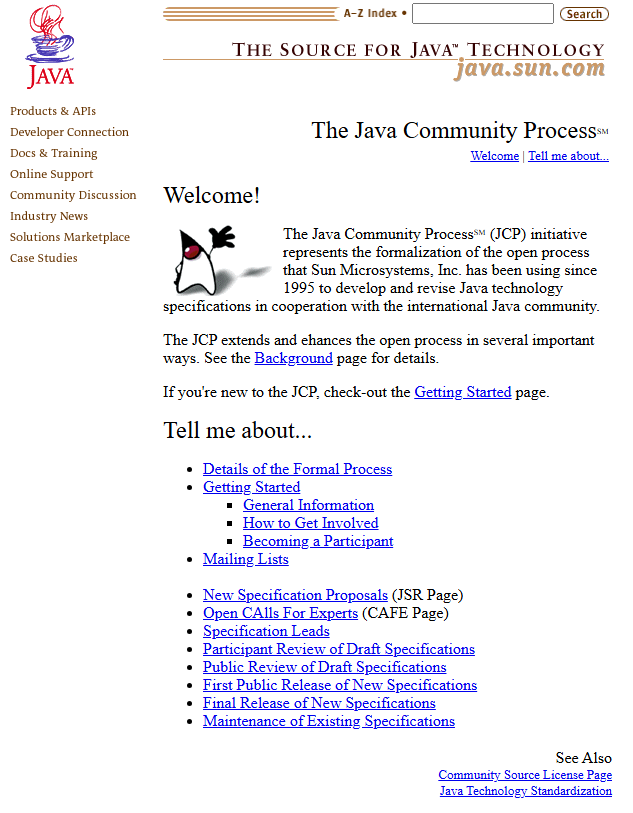
1998–2000
Static HTML pages hosted at Sun Microsystems provide information about JSRs, membership, and participation.
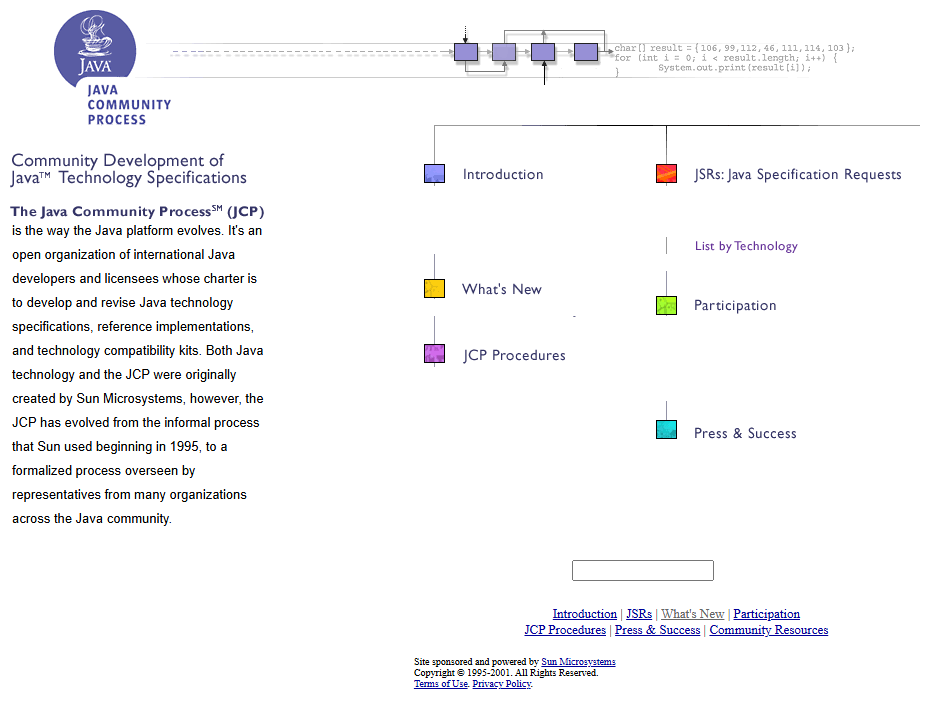
2001–2008
Database-driven JSPs display member, expert, and JSR information.
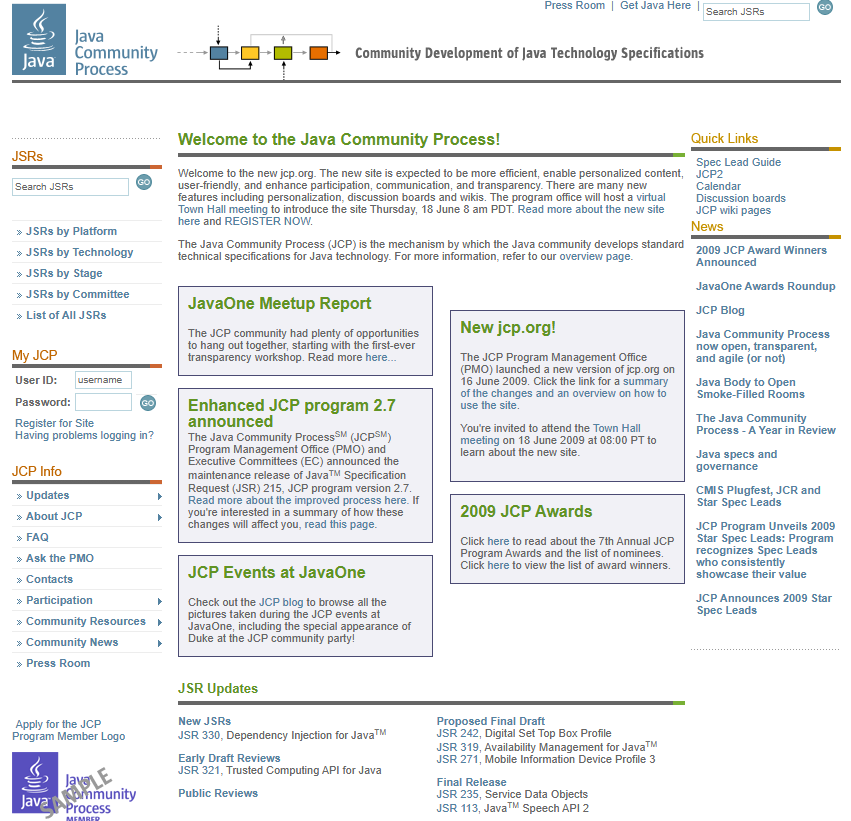
2009–2026
Personalized site featuring user accounts, online workflows, Expert Group participation tools, and increased transparency.
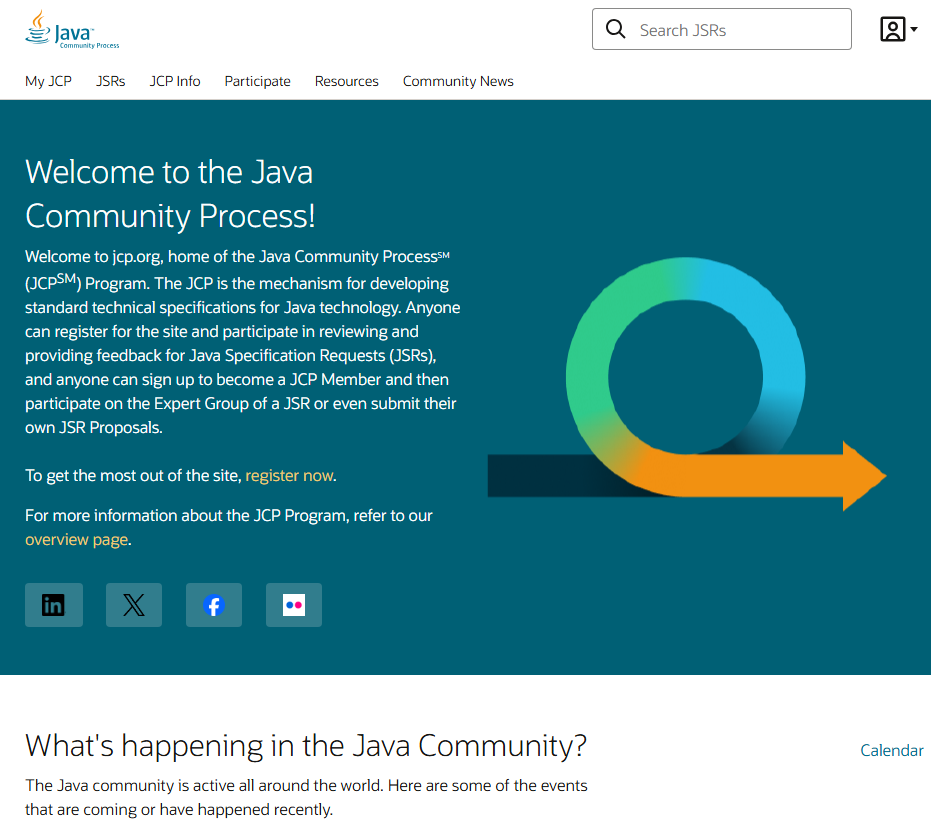
Present
A modern, accessible, community-focused experience aligned with today's Java ecosystem.
The redesign represents the first major visual update to jcp.org in many years, reflecting both the evolution of the Java ecosystem and the needs of today's community. It modernizes the user experience, improves accessibility, and makes it easier for developers, educators, technology leaders, and community members to engage with the work shaping the future of Java.
The JCP's web presence dates back to 1998, when information about specifications, expert groups, and membership was published through a collection of static web pages hosted by Sun Microsystems. Prospective members downloaded, printed, signed, and mailed membership agreements, while much of the site's content and participant information was maintained by hand. As the Java community expanded, jcp.org evolved to meet the needs of a growing ecosystem. A major update in 2001 introduced a database-driven architecture that automated the management of members, specification leads, experts, and specification information. A second major redesign, launched in 2009, added user accounts, online membership workflows, expert group participation tools, and personalized resources that made it easier for community members to engage with the standards process.
Over the years, the site continued to evolve through infrastructure upgrades and new capabilities, including the introduction of electronic membership agreements and digital signatures. In recent years it became clear that the site's visual design no longer reflected either modern web standards or the vibrant Java community it served.
Designed with the Community in Mind
The redesign project was launched with two primary goals: align the site with a modern Java-focused visual identity and improve accessibility across the platform. The new design template offers a cleaner layout, improved navigation, and a more consistent presentation across the site. Accessibility improvements incorporated throughout the redesign help ensure that JCP resources and participation opportunities are available to the broadest possible audience.
The refreshed homepage makes it easier for visitors to understand what the JCP is, how specifications move through the process, and how they can participate. The redesign also places greater emphasis on community engagement by highlighting announcements, events, newsletters, working groups, and participation opportunities throughout the site.
Visitors can more easily discover and connect with initiatives such as the Java in Education, Java Ecosystem, and Java and AI working groups, helping bring community activity and collaboration to the forefront. The redesign reflects a core principle of the JCP: that Java's continued success depends on active participation from developers, educators, students, and organizations around the world.
Behind the scenes, the redesign effort involved reviewing and modernizing hundreds of pages while preserving decades of specifications, program information, and historical content. The result is a site that better serves both long-time participants and those discovering the JCP for the first time.
While jcp.org has changed dramatically since its beginnings in 1998, its mission remains the same: providing an open, transparent, and collaborative process for defining and advancing Java technology standards.
As Java continues to evolve, the redesigned jcp.org provides a modern home for the next generation of community-driven innovation, collaboration, and standards development.
